
How Much Is Teeth Whitening in the UK?
How Much Does Teeth Whitening Cost in the UK?
Teeth whitening can cost £50 in one place and several hundred pounds in another.
At first glance, that makes very little sense. They are all described as teeth whitening, so why is one option so much more expensive?
The answer is that you are rarely comparing the same treatment.
A whitening kit bought online, treatment offered in a beauty salon and whitening prescribed by a dentist may all promise a brighter smile. What sits behind that promise, however, can be very different.
So, before choosing by price alone, it helps to know what you are actually paying for.
How much does professional teeth whitening cost?
Professional teeth whitening in the UK generally costs a few hundred pounds. Current UK price guides place dentist-supervised home whitening at approximately £350 to £600, while whitening carried out in a dental practice commonly ranges from £600 to £900. Individual fees vary according to the system used, the practice and what is included.
At Longwood House Dental Care in Ilford, our listed price for RISIO home teeth whitening is £550. At the time of writing, our current offer reduces this to £495, with a £50 consultation fee deducted from the treatment cost when you decide to proceed on the same day.
That price does not simply cover a box of whitening gel. It includes professional assessment, treatment planning and products selected for your teeth.
What are you paying for?
This is the part that often gets missed when prices are compared online.
Professional whitening begins with someone checking your mouth.
Before prescribing treatment, your dentist needs to make sure your teeth and gums are healthy enough for whitening. Tooth decay, inflamed gums, cracks, leaking fillings or exposed roots can all make the treatment uncomfortable or unsuitable.
You are also paying for:
- A dental assessment
- A discussion about the result you would like
- Custom-made whitening trays
- Professional whitening gel
- Clear instructions for using it safely
- Advice if sensitivity develops
- Support throughout your treatment
A cheaper price may cover only the whitening product. That can make two treatments appear similar when they are offering very different levels of care.
How does dentist-supervised home whitening work?
Professional home whitening is not the same as buying a universal tray online.
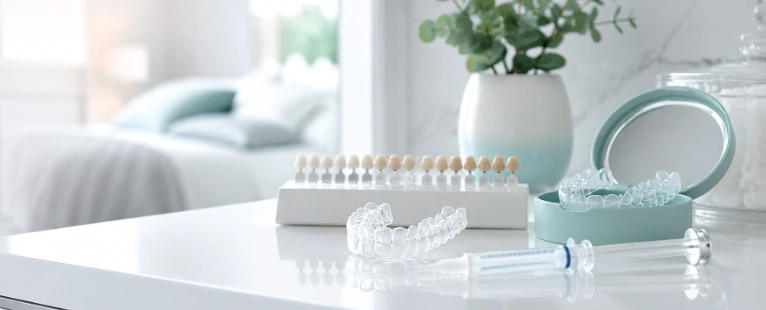
Your dentist takes impressions or digital scans of your teeth. These are used to make trays that fit closely around your smile, rather than relying on a generic shape that may allow gel to leak onto the gums.
You place a small amount of professional whitening gel inside the trays and wear them at home according to the instructions provided.
The change develops gradually, normally over a number of days or weeks. This gives you more control over the final result and allows the treatment to be adjusted if your teeth become sensitive.
The trays can also be kept for future maintenance, although any top-up gel should be used only as advised by your dentist.
Is in-practice whitening better?
Not necessarily.
In-practice whitening is popular because it can produce a faster change. Your gums are protected before the whitening product is applied, and the treatment is managed during an appointment at the dental surgery.
Home whitening works more gradually, but that does not mean the result is less effective. Many patients prefer being able to control the pace and complete the treatment around their usual routine.
The better option is the one that suits your teeth, your schedule and the kind of result you have in mind.
A wedding in three weeks may call for a different plan from simply wanting to soften several years of tea and coffee staining.
Why do teeth-whitening prices vary?
The whitening system is only one part of the calculation.
Your starting shade
Some teeth respond more quickly than others.
Surface staining from coffee, tea, red wine or smoking may behave differently from discolouration inside the tooth. Age, enamel thickness and the natural colour beneath the enamel also influence the final shade.
A responsible whitening plan should begin with what is realistic for your teeth, not a promise that everyone will finish with exactly the same shade.
The health of your mouth
Whitening gel should not be placed over untreated decay or active gum disease.
You may be advised to have a hygiene appointment, a filling or another piece of dental treatment first. That is not an added extra designed to inflate the cost. It is about making sure whitening is comfortable and safe.
What the treatment includes
Ask whether your quotation includes:
- Your consultation
- Custom trays
- Whitening gel
- Review appointments
- Additional gel for maintenance
- Help with sensitivity
The headline price only becomes useful once you know what sits behind it.
Existing dental work
Whitening gel changes the shade of natural teeth. It does not whiten crowns, veneers, bridges or composite fillings.
A crown that currently matches your teeth may appear darker once the surrounding enamel has been whitened. The same can happen with a white filling on a front tooth.
This does not always prevent whitening, but it should be discussed before treatment begins. In some cases, a visible restoration may need to be replaced later to match the new shade.
Why not choose a cheap online kit?
Some online whitening kits cost very little because products sold directly to consumers contain much lower concentrations of whitening ingredients.
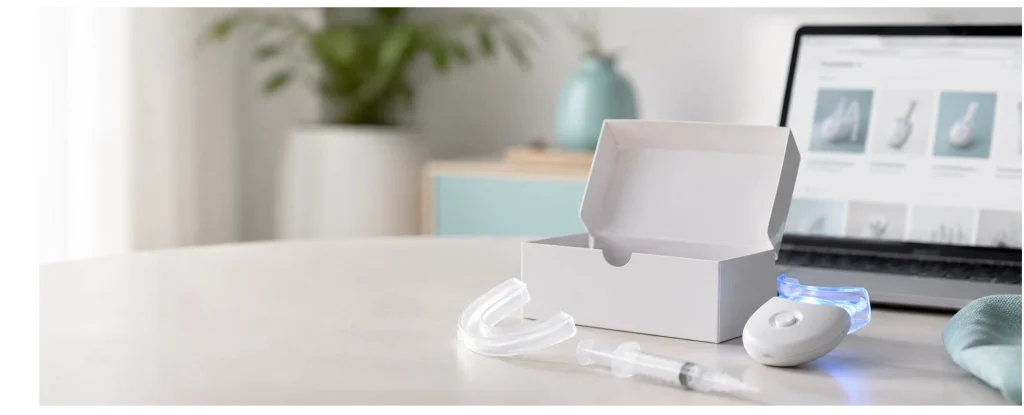
They may help remove some surface staining, but they are unlikely to perform in the same way as a treatment prescribed by a dentist. Current UK guidance also warns that kits bought online or whitening provided outside a dental setting may be less effective and could harm the teeth or gums.
There is another issue too.
An online kit cannot tell you why a tooth is dark.
It could be ordinary staining. It could also be decay, an old injury, a problem with the nerve or a leaking restoration. Whitening the tooth without understanding the cause may delay the treatment it actually needs.
In the UK, tooth whitening is legally considered a dental treatment. It can only be provided by registered dental professionals, with dental hygienists, therapists and clinical dental technicians working to a dentist’s prescription where appropriate.
Is professional teeth whitening safe?
Yes, when it is prescribed and supervised by an appropriately registered dental professional.
The NHS describes whitening provided by a dentist, either through a dentist-supplied home kit or at a dental surgery, as the safest way to have the treatment.
Some patients experience temporary sensitivity. This can feel like a short response to cold drinks, food or air, and it normally settles.
Tell your dentist if your teeth are already sensitive. Your wearing time, whitening schedule or products may be adjusted to make the treatment easier to manage.
Having someone who can adapt the treatment is one of the reasons professional supervision matters.
How white will my teeth become?
There is no single correct shade.
Some people want a clear, noticeable change. Others want their smile to look fresher without anyone immediately asking whether they have had their teeth whitened.
Your natural shade, enamel and type of staining will all influence the result. Whitening can lighten your natural teeth, but it cannot create a shade that the tooth is unable to reach safely.
The best result is not always the brightest square on a shade chart. It is the one that still looks like your smile, only cleaner and lighter.
How long does teeth whitening last?
Whitening is not permanent, but the result does not disappear overnight.
Your teeth will gradually collect new staining from food, drinks and everyday life. Tea, coffee, red wine and smoking can make this happen more quickly.
You can help maintain the result by:
- Brushing twice a day with fluoride toothpaste
- Cleaning between your teeth every day
- Attending regular dental and hygiene appointments
- Rinsing with water after strongly coloured drinks
- Using top-up gel only as instructed
You do not need to spend the rest of your life drinking through a straw or refusing every cup of coffee. A sensible maintenance routine is far more realistic.
Is professional teeth whitening worth the cost?
That depends on what you expect it to do.
Whitening will not straighten crowded teeth, repair a chip or alter the shape of your smile. It also cannot change the colour of crowns or fillings.
What it can do is lift staining and lighten suitable natural teeth without removing healthy tooth tissue. That makes it one of the more conservative ways to refresh a smile.
The value lies in knowing that your mouth has been checked, the treatment has been selected for you and you have someone to speak to if your teeth become sensitive or the result is developing differently from expected.
You are not simply buying gel. You are paying to have the treatment carried out properly.
Teeth whitening at Longwood House Dental Care in Ilford
At Longwood House Dental Care, we use the RISIO teeth-whitening system to help patients lighten staining and achieve a fresher, natural-looking shade.
Your treatment starts with a proper look at your teeth and gums. We will discuss what you would like to change, what whitening can realistically achieve and whether any existing fillings or crowns may affect the result.
You will know what is included and what it costs before you decide.
Because choosing teeth whitening should not feel like comparing mystery boxes.
Book your teeth-whitening consultation and let’s find the approach that suits your teeth, your routine and the result you would like to see.
Common questions about teeth whitening
Does teeth whitening work on crowns and fillings?
No. Whitening gel lightens natural teeth but does not alter the shade of crowns, veneers, bridges or composite fillings.
Can sensitive teeth be whitened?
Often, yes. The cause of the sensitivity should be assessed first, and your treatment schedule may need to be adjusted.
Will I need a hygiene treatment before whitening?
Not everyone will. It may be recommended if plaque, tartar, staining or gum inflammation could affect the comfort or result of your treatment.
Is teeth whitening available on the NHS?
Teeth whitening is considered a cosmetic treatment and is generally paid for privately rather than provided through the NHS.
How long does home whitening take?
The timing depends on the whitening system, your starting shade and how your teeth respond. Treatment is normally completed gradually over several days or weeks.