
Snoring, Sleep and Dental Treatment: When Is It Time to Get Help?
Snoring is one of those things people tend to put up with for far too long.
It becomes the reason nights feel broken, the thing that keeps disturbing someone else’s sleep, the problem people adapt to instead of getting checked.
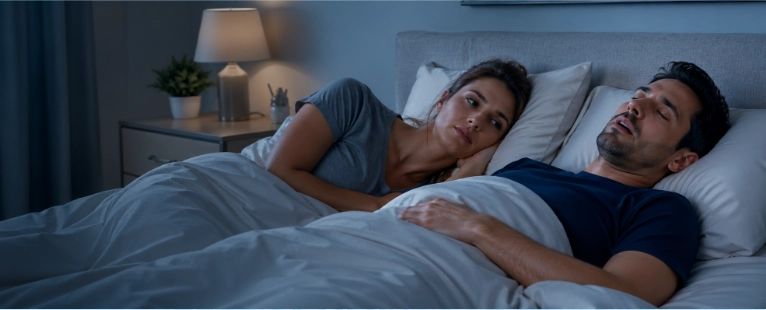
But snoring is not always just noise. Sometimes it is simple snoring. Sometimes it is a sign that the airway is narrowing too much during sleep. And sometimes it can sit alongside something more serious, like obstructive sleep apnoea. The NHS advises getting checked if your breathing stops and starts during sleep, if you wake making gasping or choking sounds, or if you are very sleepy in the daytime.
Poor sleep has a way of spilling into everything else: your energy, your concentration, your mood, your patience, even your relationships. National Stop Snoring Week in the UK exists for exactly this reason: to raise awareness that people do not have to quietly live with snoring and disturbed sleep without looking into it.
Why do people snore?
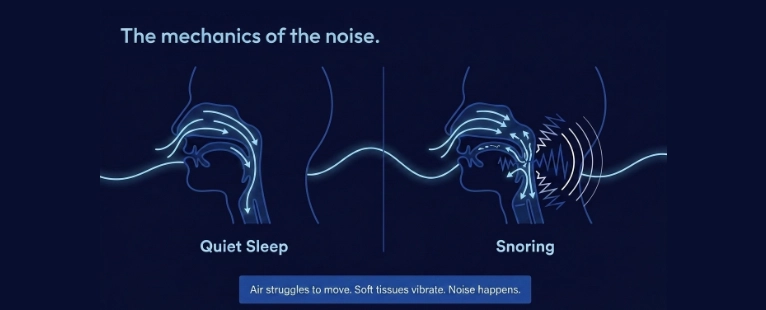
Snoring usually happens when air struggles to move freely through the upper airway while you sleep. As the airway narrows, soft tissues vibrate, and that vibration creates the sound of snoring. In sleep apnoea, the airways become too narrow during sleep, which can interrupt breathing as well as cause loud snoring.
There can be a few reasons for that narrowing. Weight can play a part. Alcohol can make snoring worse. Sleeping on your back can contribute. Smoking can add to the problem, too. Getting older and family history are also factors linked to sleep apnoea.
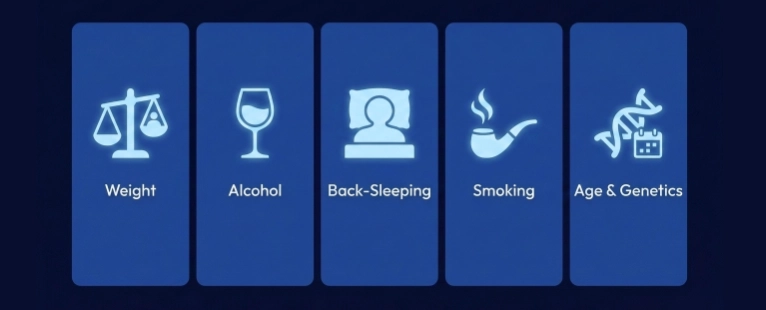
So while snoring may sound like one simple thing, the reason behind it is not always so simple.
When is snoring worth checking?
Not every snorer has sleep apnoea. But some symptoms should not be shrugged off.
If snoring is loud and regular, if someone notices pauses in breathing, or if there is gasping, choking, poor-quality sleep, morning headaches, or persistent tiredness during the day, it is worth getting assessed. Sleep apnoea can be serious if it is not diagnosed and treated.
This is the point where snoring stops being “annoying but harmless” and becomes something worth paying proper attention to.
Not because anyone needs frightening, but because good sleep matters more than people often realise.
Can a dentist help with snoring?
In the right case, yes.

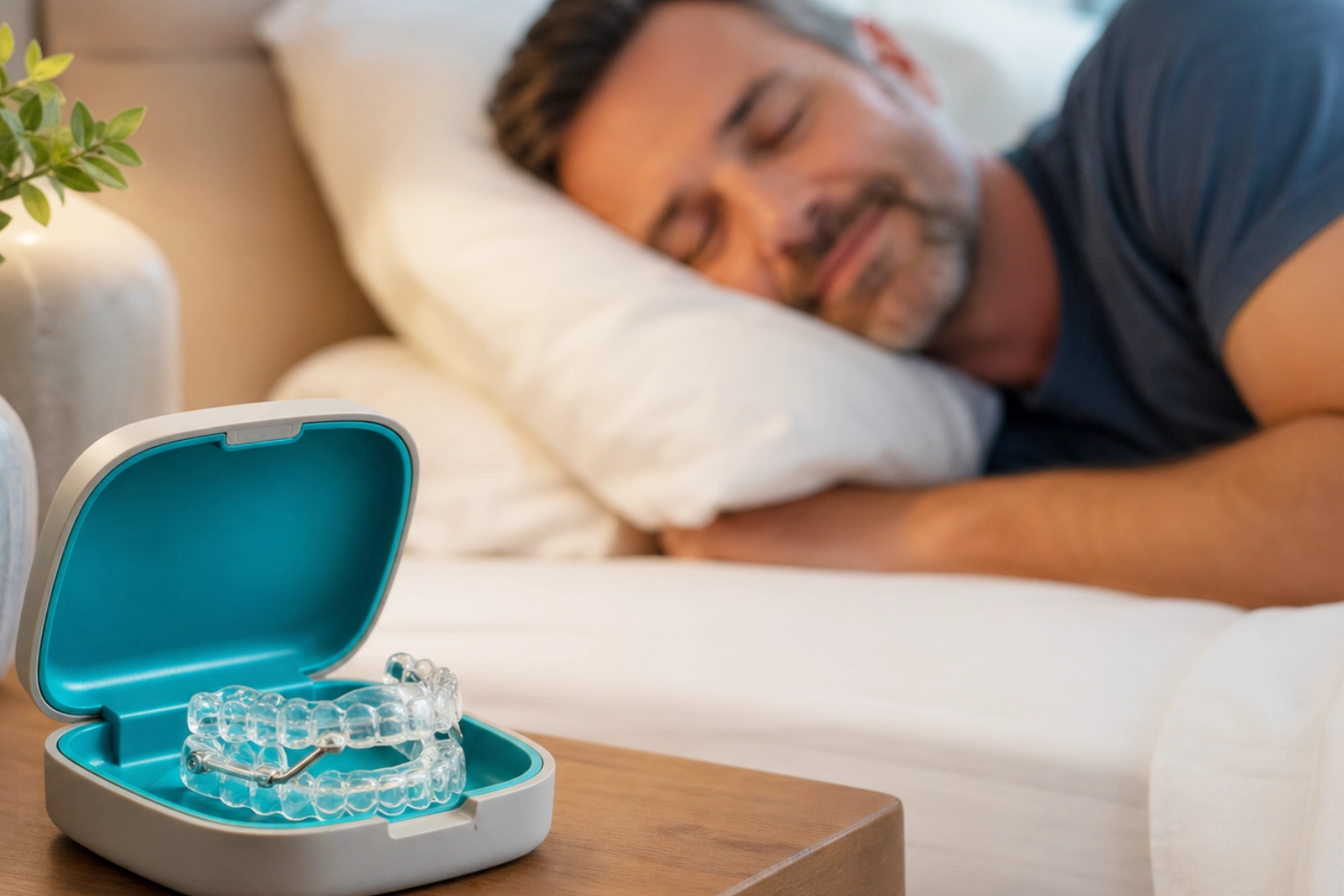
One of the recognised options for snoring, and for some cases of mild to moderate sleep apnoea, is a mandibular advancement device or mandibular repositioning appliance. It’s a gum shield-like device that helps hold the airways open during sleep. This kind of appliance works by gently holding the lower jaw forward and moving the tongue forward, which helps clear the airway during sleep. Their guidance says it can help treat snoring and mild to moderate sleep apnoea.
The British Orthodontic Society also describes mandibular advancement splints as removable appliances worn at night to treat snoring and obstructive sleep apnoea by holding the lower jaw forward.
In plain English, it means a custom device can sometimes help create more room in the airway while you sleep, which may reduce the vibration that causes snoring.
What kind of treatment is this?
This type of treatment is non-surgical and worn at night, a bit like a dental appliance or gum shield. It is designed to fit the mouth and gently reposition things enough to help airflow.
That is important because not every mouthpiece sold online does the same job, and not every snorer needs the same thing.
Good treatment starts with understanding the reason for the snoring, not just trying random fixes and hoping for a quieter night.
Is a dental appliance right for everyone?
No, and that honesty matters.
The right option depends on what is causing the snoring and whether sleep apnoea is involved. The British Orthodontic Society lists three clinically proven approaches for snoring and sleep apnoea: lifestyle changes, CPAP, and mandibular advancement splints. It also notes that CPAP is the best and most common treatment for severe obstructive sleep apnoea.
So if someone has severe sleep apnoea, a dental appliance may not be the first answer. If someone has simple snoring or mild to moderate sleep apnoea, it may be a very useful option. That is why assessment matters first.
Who tends to benefit most?
Usually, people who snore regularly, feel tired of disturbed nights, or are being told by the person next to them that the snoring is getting worse. It can also suit people looking for a non-surgical option that feels manageable and realistic to wear at home. Guidance from Guy’s and St Thomas’ supports the use of these appliances for snoring and mild to moderate sleep apnoea.
Sometimes the first sign is not the noise itself. It is the tiredness, the lack of focus, the poor sleep that starts shaping everyday life.
What matters most
Snoring is common. That does not always mean it is harmless.
If sleep feels broken, if the snoring is loud and persistent, or if there are breathing pauses and daytime exhaustion, it is worth taking seriously. The good news is that there are recognised ways to investigate it and, for the right patients, effective ways to help.
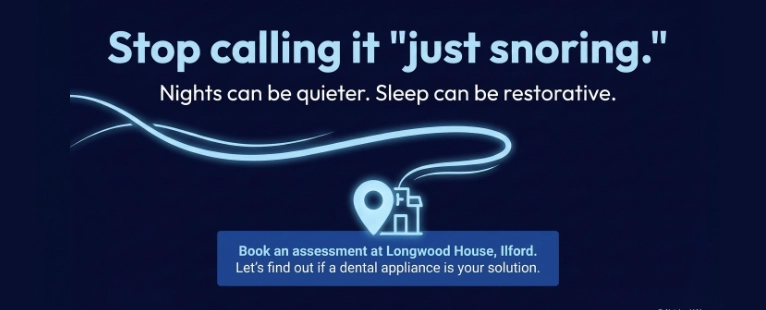
And sometimes, the first useful step is simply to stop calling it “just snoring”.
If snoring is affecting your sleep, your energy, or the person sleeping beside you, book a visit and let’s talk through what may help.
At Longwood House, we offer anti-snoring treatment in Ilford because, for the right patient, a dental appliance can make nights quieter and sleep feel more restorative.