
How Long Does It Take for Invisalign to Work?
You’re not looking for a new hobby. You’re looking for straighter teeth that fit into your routine. Let’s talk about how long Invisalign really takes.
You can want to fix crowding or an overbite and still want to eat normally, speak confidently, take photos without thinking, and not feel like your teeth are “the main character” for the next two years.
So when someone asks, “How long does Invisalign take?” what they usually mean is:
How long until I can see a change, and how long until I’m finished?
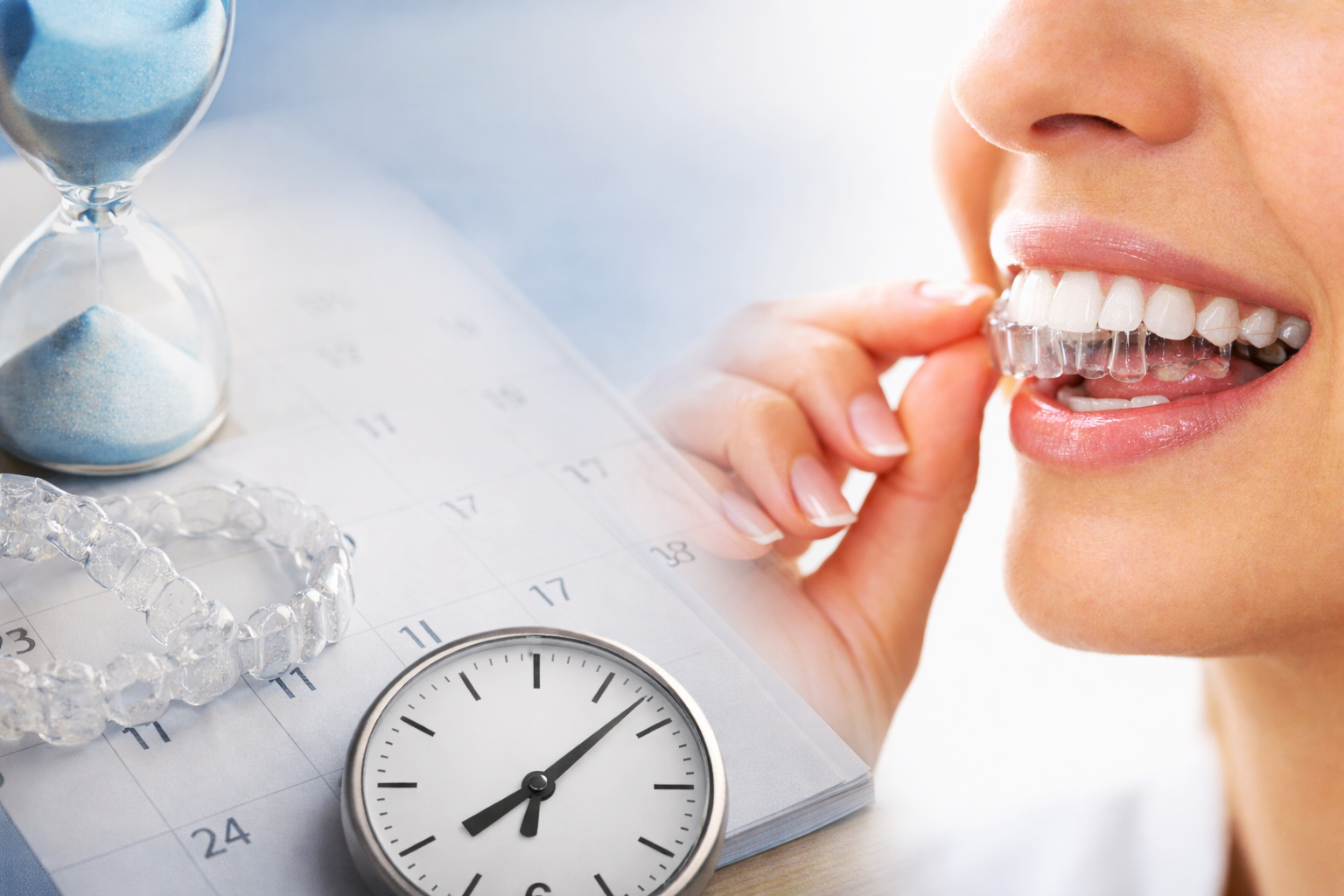
Most Invisalign treatment plans fall between 6 and 18 months. Some are shorter, some take longer, and the reason is always the same: teeth move at the pace your mouth allows, and at the pace your aligners are actually worn.
At Longwood House Dental Care, we plan Invisalign with scans and real measurements, not guesswork, so your timeline feels grounded from the start.
The two timelines that matter

1) When you’ll start noticing changes
Many patients start seeing small shifts in 6–12 weeks. Often it’s subtle at first; a front tooth looks less twisted, a gap looks smaller, and brushing feels easier. By 3–6 months, changes are usually obvious enough that people start getting comments like, “Have you done something different?” even if you haven’t told anyone you’re wearing aligners.
2) When you’ll be “done”
That’s the full treatment timeline; for most people 6–18 months, depending on what we’re correcting.
And yes, the range is wide. That’s not because Invisalign is unpredictable; it’s because your starting point matters. A small cosmetic alignment is very different to a bite correction.
What Invisalign actually does
Invisalign is a revolutionary orthodontic treatment that uses clear, removable aligners to gradually straighten your teeth. Unlike traditional braces that use metal wires and brackets, Invisalign uses a series of clear, removable aligners, each one designed to move specific teeth by tiny amounts. You wear them 20–22 hours a day, swap to the next aligner every 1–2 weeks, and we check progress along the way to make sure everything is tracking.
You take them out to eat, drink anything hot, brush, and floss. That’s why many adults and teens love Invisalign; you get orthodontics without feeling like you’ve lost your routine.
The aligners do the nudging; your body does the rebuilding. Your bone remodels around the new tooth position gradually and safely.
So, how long does Invisalign take on average?
Here’s a realistic guide. Think of this as “most common ranges”, not a promise.
Mild alignment, cosmetic tidy-up
Around 3–6 months
Small spacing, a minor rotation, slight crowding, often very straightforward.
Mild to moderate crowding or spacing
Around 6–12 months
This is a big chunk of Invisalign cases; visible improvement, stable finish, and usually predictable progress.
Bite changes (overbite, underbite, crossbite), or more complex movement
Around 12–18 months
Bites are not just “straight teeth”; they’re the coordination between upper and lower teeth. That may need extra planning, attachments, elastics, and sometimes a refinement phase.
Complex cases
18+ months
Occasionally, a case is more complex due to bite, crowding, missing teeth, or previous orthodontics. We’ll tell you up front if you’re in this bracket.
What affects how long Invisalign takes?
1. How much movement is needed
The bigger the movement, the longer it takes. That sounds obvious, but it helps to understand why.
If one tooth needs a gentle rotation, that can be fast. If multiple teeth need to be moved, levelled, rotated, and the bite needs to settle, Invisalign works in careful stages.
A common example:
- A little spacing in the front can close quite quickly.
- An overbite correction may need upper and lower teeth to move together, not just “straighten”.
2. Overbite and bite correction
For overbite, Invisalign often uses a mix of:
- aligners to guide teeth,
- attachments (small tooth-coloured bumps) to help grip and control movement,
- and sometimes elastics to coordinate upper and lower arches.
This doesn’t mean it’s “worse” or “harder”; it just means the plan is doing more than cosmetic straightening. Bite correction tends to sit in the 12–18 month range more often than not.
3. Your age and bone response
Teens sometimes see faster movement because the jaw is still developing and bone turnover is naturally higher. Adults can absolutely get excellent results; it can just take a little longer for some movements because bone is more stable.
What matters most is not age alone; it’s biology plus wear time.
4. Wear time, the quiet deal you make with yourself
Invisalign only works when it’s in your mouth.
If you wear aligners 20–22 hours a day, treatment stays on schedule. If you wear them “most of the time”, the timeline stretches.
This is where Invisalign is very honest. It’s not judging you, it’s just physics and biology.
A practical way to think about it:
Aligners in for 14–16 hours a day = teeth hesitate, then you need extra aligners to catch up.
Aligners in for 22 hours a day = teeth move as planned.
5. Oral health and preparation
If gums are inflamed or there’s untreated decay, we fix that first. Not because we’re being fussy, but because healthy gums track better and feel better during orthodontics.
6. Your goals
Some patients want a gentle cosmetic improvement. Others want:
- a bite that feels more comfortable,
- teeth that are easier to clean,
- less chipping or wear,
- and a result that looks good and functions well.
When function is part of the goal, the plan can take longer, and the finish is usually more satisfying.
How does the Invisalign journey look at Longwood House
Step 1: Consultation and digital scan
We assess your teeth, gums, and bite, then take a digital scan (often iTero-style). This gives us a detailed 3D view and lets us plan movements with accuracy.
This step matters because it turns your Invisalign timeline into something real. You’re not left with vague promises; you get a plan and a sensible estimate.
Step 2: Your aligners arrive
Once your plan is approved, your aligners are made and fitted. We show you:
- How to wear them,
- How to take them out without bending them,
- How to keep them clean,
- And how to handle the first few days.
Most people adapt quickly. The first week is usually the “I keep noticing them” week. Then they become normal.
Step 3: Check-ups and tracking
You’ll usually see us around every 6–8 weeks. These appointments are short and purposeful; we check progress, make sure aligners are tracking, and keep your plan moving.
If we need to add attachments or adjust elastics, we do it carefully, with explanations that make sense.
Step 4: Refinements (sometimes)
Sometimes, after the main series of aligners, we do a refinement phase. That simply means:
- The teeth are very close,
- We scan again,
- And we fine-tune the last details.
It’s not a failure; it’s normal orthodontic precision. Teeth aren’t Lego bricks; they’re living structures. Refinements are how we make a good result feel finished.
Step 5: Retainers
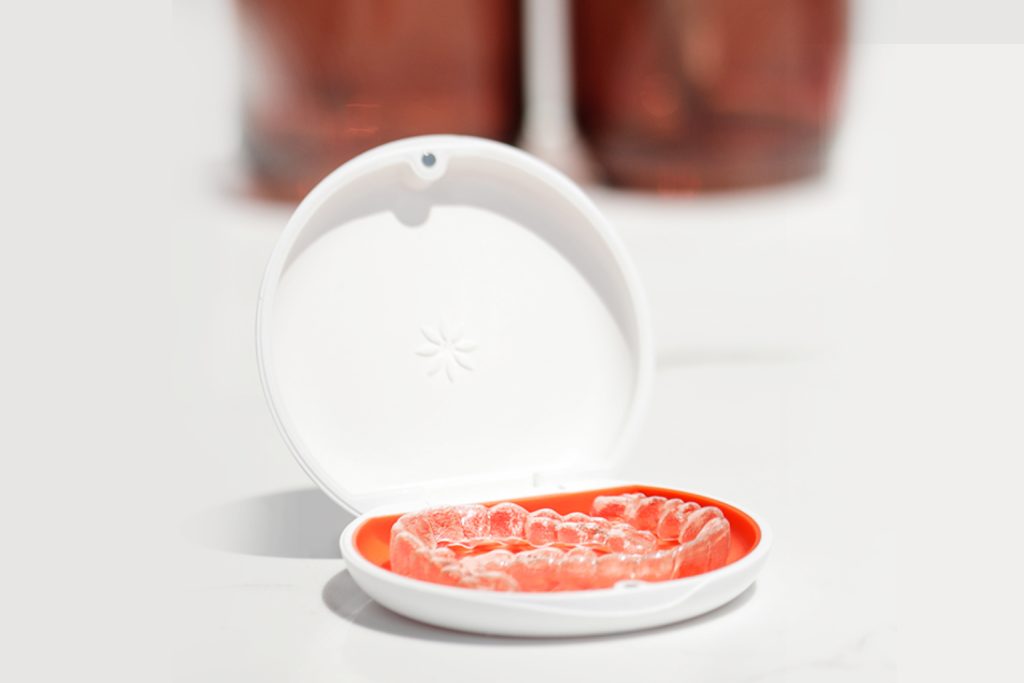
Retainers are the part that protects your investment.
Without retainers, teeth can drift. Not because treatment “didn’t work”, but because your mouth is always under subtle forces (tongue, chewing, clenching, habits).
We’ll advise on retainer wear based on your case; usually more consistent at first, then night-time long term.
How to keep Invisalign on time
Here’s the gentle truth: Invisalign is a partnership.
You do the wear time. We do the planning, monitoring, and course-correcting.
If you want your Invisalign timeline to stay as close as possible to the plan:
- Wear aligners 20–22 hours a day.
- Only drink water with them in; hot drinks can warp plastic.
- Change aligners on the exact schedule we give you.
- Use chewies/aligner seaters if we recommend them; they help aligners fit snugly.
- Keep up with cleaning; healthy gums track better.
- Keep your check-ups; small issues are faster to fix early.
Can you speed up Invisalign?
People ask this a lot, usually because they have an event coming up, a wedding, a job change, a holiday, or they’re simply ready to be done.
The biggest “speed tool” is not a gadget; it’s wear time.
That said, in some cases, we can use tools like:
- attachments to improve grip and control,
- elastics for bite correction,
- and, where appropriate, acceleration devices (we’ll be honest about whether they’re worth it for your case).
The fastest Invisalign case is the one that tracks cleanly, without interruptions.
Invisalign vs braces for timelines
In many mild to moderate cases, Invisalign can be similar or even faster than braces. In complex cases, both can take time, and sometimes fixed braces are better suited for very specific movements.
We’ll tell you clearly if Invisalign is ideal for your case, or if another option will get you there more efficiently.
That clarity matters more than selling any one system.
The part nobody says out loud
A lot of people start Invisalign because they want straighter teeth. They finish because of how it feels.
When your teeth line up better:
- brushing becomes easier,
- edges chip less,
- bite forces distribute more evenly,
- and your smile looks “calmer”, even if nobody can explain why.
That’s what good orthodontics does. Quiet confidence.
FAQs
How long does Invisalign take to show results?
Many patients notice changes within 6–12 weeks, with clearer visible shifts around 3–6 months. Full treatment often takes 6–18 months.
Does Invisalign hurt?
You may feel pressure when you move to a new aligner, especially in the first couple of days. It’s usually mild and manageable, more “tight” than painful.
How often do I need check-ups?
Typically every 6–8 weeks, sometimes with shorter reviews depending on your plan.
Can Invisalign fix an overbite?
In many cases, yes. Timeline depends on severity and whether we use attachments and elastics, often 12–18 months for bite correction.
Will my teeth stay straight after Invisalign?
Yes, if you wear your retainers as advised. Retainers are what keep the result stable.
Is Invisalign suitable for everyone?
It suits most mild to moderate alignment problems and many bite cases. Some complex cases are better served by other orthodontic approaches. We’ll tell you clearly after the assessment.
Ready to know your timeline?
If you’re considering Invisalign, the next step is simple: a consultation and scan. You’ll leave with:
- a realistic estimate,
- a clear plan,
- and a sense of what will matter most for success in your case.
No hype. No pressure. Just a plan that fits your smile and your life.